


Welcome back to Happy Endings, where I write about contemporary love, and the sex life of my marriage.
I’m Abigail, a mom of two boys, a meditation enthusiast, cocksucking feminist, born-again monogamist, sextech leader, and lingerie collector. This week, I’m writing from Minneapolis.

There’s a woman on my mind.
She’s a part of me. She’s a part of many people I know. You might be her. You might be married to her. Her most chronic archetype just wrote an anonymous sexposé in Playboy that fell through my Instagram feed propelled by serendipity and the Baader-Meinhof phenomenon, because, as I say, she’s been on my mind.
She’s a woman who doesn’t orgasm often. Maybe once per month. Maybe less. And the reason isn’t because of intentional celibacy, health issues, asexuality, or ideology, exactly. It’s because she’s busy. She’s prioritized everything but herself. Her pleasure isn’t important.
If this is you, I’m writing to you.
Perhaps your deprioritization of climax is because you’re absorbed in the machinations of modern feminine life. Achieving expectations and gliding through the rat race at the expense of your self connection. I bet your challenging career is pretty damn balanced, the texts from your friends and family are responded to within reasonable timelines, you schedule and attend (without rescheduling) the recurring appointments required for your health and societally expected appearance. Perhaps you’re self-sufficient — thriving (attemptedly) without requiring a partner. Sometimes you’re the woman who does everything for everyone, including maintenance sex at an interval as to not cause a disturbance to your life.
Life, here, is defined as everything outside of yourself — what others see, others admire, others need.
I’m guessing masturbation is rote. Partnered sex is choreographed from learned successive actions plus a dash of externally inspired dynamism to not fall into a trap. You’re always steps ahead of traps. Because you’re always thinking ahead. Never here, never now. You’re lost above the now — in your mind, so much so, you’ve nearly lost connection to your body.
I call this woman a Lost Body Woman.
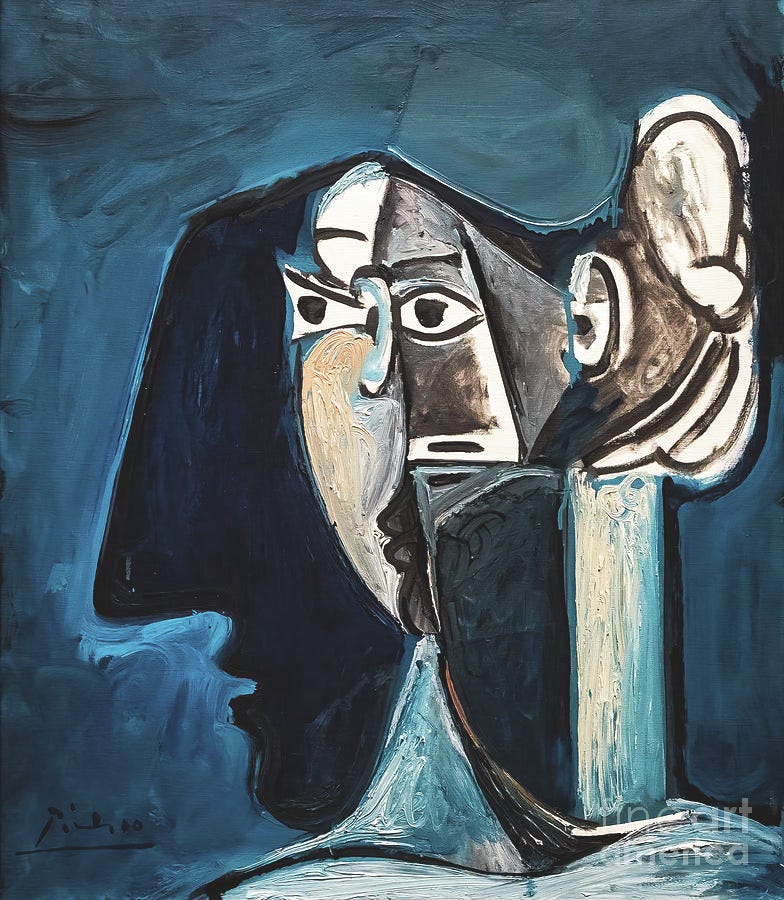
Lost, here, is defined as being missing from one’s own bodily sensations, disconnected, without an easy way back.
The Lost Body Woman knows something is missing, but she’s looking in the wrong place. Like Alice down the rabbit hole. Wonderland is societal expectations, someone else’s interests, or the fear-based ambitions you accepted as an identity long ago, and kept trundling toward, not questioning your trajectory. Alice’s tree, her real world, is the capacity to be present in your body enough to listen to your gut, and let arousal rise.
The Lost Body Woman is not a difficult image to conjure. She is all over our culture. But we can’t blame tropes and screenwriters. We could blame our bodies, as women’s hormones albeit push us toward self-sacrifice. Our bodies aren’t always easy to be present in. When modern strife and expectation are mixed in, the striving to fulfill all the dutiful checkboxes is no surprise.
At times, I am this woman. You might be her, too. Some of you will be in love with her, noticing the way she ignores her own sexual satisfaction, maybe you question her, but she simply says she’s just not interested today. Sometimes that’s true, but sometimes that’s the easy way out — to stay lost, and believe that’s where you belong. Seeing Wonderland as the real world is a compelling narrative to more than just a woman.
That anonymous Playboy writer certainly wouldn’t have defined herself as lost before she came, from the guidance of someone called the O-Man. She thought she was too busy. She’d so manufactured her understanding of life around what other’s saw — her bylines, her figure — that she couldn’t even see sex as appealing. She’d pushed away the experience, and when obliged, stayed in her mind, imaging nonsexual things entirely, until the sex itself passed.
It pains me to see a woman lost, uninterested in pleasure. Because even though being lost is understandable — life will lead us away from our body, our minds will lead us away from our body — remaining lost is a choice made from pain and fear. This sexposé writer’s dismissal of her own pleasure was so engrained, it became righteous. Pain and fear kept her from coming, and tricked her into believing that’s where she belonged.
I write about sex, work for a sex video website, am viciously aware of the pleasure-void of martyrdom, and I still fall into self-dismissing identities on occasion. I want to be a great mother. I want to be a great wife. I want to be a great friend, a great employee, a great daughter. And with the impossible tasks on my shoulders, clouded by stress, I forget I’m in Wonderland, seeking perfectionist fantasies, forgetting to just sit at the roots of the Oak in my backyard and feel my body.
I wanted to write a plea to this woman because, as I said, she’s been on my mind. Because sometimes the only way I can remind myself to prioritize myself, is to think of you.
So I write to you, to the Playboy writer, to myself. I say: I understand. Pretending you’re a machine might be convenient, but that’s not who you are. You’re a human. With a body. Which, as the Playboy writer realized, will one day stop working. So before then, instead of chasing off death, fixating on work that makes you immortal or the health metrics/appearance that suggests you’re forever young, just stop. You lost yourself. Come back. Come, period. Then come again.


This Thursday, paid subscribers will get my advice on how to come back from the Lost Body state, including how supportive partners of these preoccupied woman can aid the bodily reconnection process, as a part of my every other week Praxxxis series.
Did you read my husband’s analysis of my red, green, and weird flags during our courtship? Or my report card on how his woo’ing characteristics have fared after the years of our marraige?

Abigail, “Lost Body Woman” gives language to a form of disappearance that can hide inside competence, responsiveness, and care for everyone else. The essay’s most consequential move is placing pleasure within self-connection, since the body may become the first place a woman leaves while every visible responsibility remains intact. Your return to the oak tree shifts the conversation from climax as achievement toward embodiment as presence, giving readers a wider doorway back to themselves. Thank you for examining how ambition, service, and perfectionism can quietly separate a woman from the body carrying her through them.
This is beautiful. The Lost Body Woman is so evocative. So many women of have lost connection and don't even miss it. (Also, live in Sydney, but for 9 years lived in Minneapolis, until we moved across the globe a year ago).